 School
AI is Rewriting
the Rules of Education.
Right Now.
Your students are already using ChatGPT, Claude and Gemini — every single day, for every assignment. The question is no longer whether AI will enter your school. It already has. The question is whether you will shape how they use it — or let them figure it out alone.
AI entered the classroom before anyone was ready.
The gap between how AI is advancing and how education is adapting is growing every month. Students are caught in the middle — with powerful tools, no guidance, and no framework for using them responsibly.
Students are using AI right now — unsupervised
They're using it to write essays, solve homework problems, summarise textbooks, generate study notes. Some are learning. Many are just copying. None of them received training on how to use it well — or safely.
Most schools have no strategy
Some ban devices. Some look the other way. Some are "thinking about it." Meanwhile, AI tools are evolving faster than any curriculum committee can meet. Schools that wait are already falling behind.
Teachers are left to figure it out alone
Educators are expected to detect AI-generated work, answer student questions about AI, adapt their teaching style — with zero training, zero tools, and zero time. 89% say they feel unprepared.
The next generation is at risk
Children who only copy from AI will arrive in adulthood without the critical thinking skills the real world demands. This isn't a future risk. The first cohort of "AI-raised" students is already in secondary school.
A new framework for education in the AI era.
To bridge this widening gap, schools need more than a temporary policy or a ban on devices. We need a proactive, structured framework that empowers both educators and students.
Clear AI Policy & Guidance
Every school must establish explicit, realistic guidelines on what constitutes acceptable AI assistance and what is academic integrity fraud.
Teacher Empowerment & Training
Teachers need practical training to use AI tools for lesson prep, grading, and instruction, and to detect and address AI abuse.
Critical Thinking & Verification
Students must be taught to treat AI as a co-pilot, always verifying facts, cross-referencing sources, and understanding bias.
Practical Tech & Coding Skills
Moving students from passive consumers of AI to active creators by teaching Python, programming fundamentals, and AI system design.
This isn't a tech trend. It's a generational shift.
Every major technology revolution — the printing press, electricity, the internet — transformed education. Each time, the institutions that adapted early produced the next generation of leaders. Those that waited produced people who struggled to keep up.
AI is moving faster than any previous revolution. The gap between AI-literate students and those without guidance is already visible in university applications, job placements, and cognitive assessments. It will widen dramatically over the next decade.
The students in school today will graduate into a world where:
- 85% of jobs that will exist in 2030 don't exist today
- AI fluency is a baseline job requirement in almost every sector
- Critical evaluation of AI output is a core professional skill
- Those who understand AI will direct it — those who don't will be directed by it
For Today's Students
They need to learn to use AI as a thinking partner — not a crutch. To question its outputs, understand its biases, and build the irreplaceable human skills that AI cannot replicate: creativity, judgment, empathy, and ethical reasoning.
For the Next Generation
Children entering primary school today will navigate a world we cannot fully predict. The skill that will matter most isn't any specific subject — it's the capacity to learn, adapt, and think critically alongside ever-evolving AI systems. We must teach that capacity now.
For Schools Right Now
Every month without a strategy is a month your students use AI unsupervised, your teachers feel unsupported, and your institution falls further behind. This is the moment to act — not to wait for a mandate from above.
SchoolAI bridges the gap between AI and education
We work with schools, teachers, and students to build real AI literacy — not buzzword compliance. Everything we do is practical, grounded in 15+ years of real-world AI engineering, and designed for the actual classroom.
For Schools & Institutions
AI strategy consulting — we audit your school, design your AI integration roadmap, write your AI policy, and train your staff. From a single workshop to a full 6-month transformation.
- AI Readiness Audit
- 12-Month Integration Roadmap
- AI Policy Design
- Staff Training Workshops
For Teachers
A 4-week course that gives educators practical AI skills for the real classroom — lesson prep, quiz generation, grade analysis, and guidance on handling AI with students.
- Lesson Planning with AI
- Quiz & Assessment Generation
- Student Performance Analysis
- Guiding Students Responsibly
For Students
Two courses: AI for Education (use AI to think, understand the dark side) and Python Programming (build real projects, your first AI scripts). For ages 10–18.
- AI for Education — Ages 12–18
- Python Programming — Ages 10–17
- Critical Thinking Skills
- Real, Buildable Projects
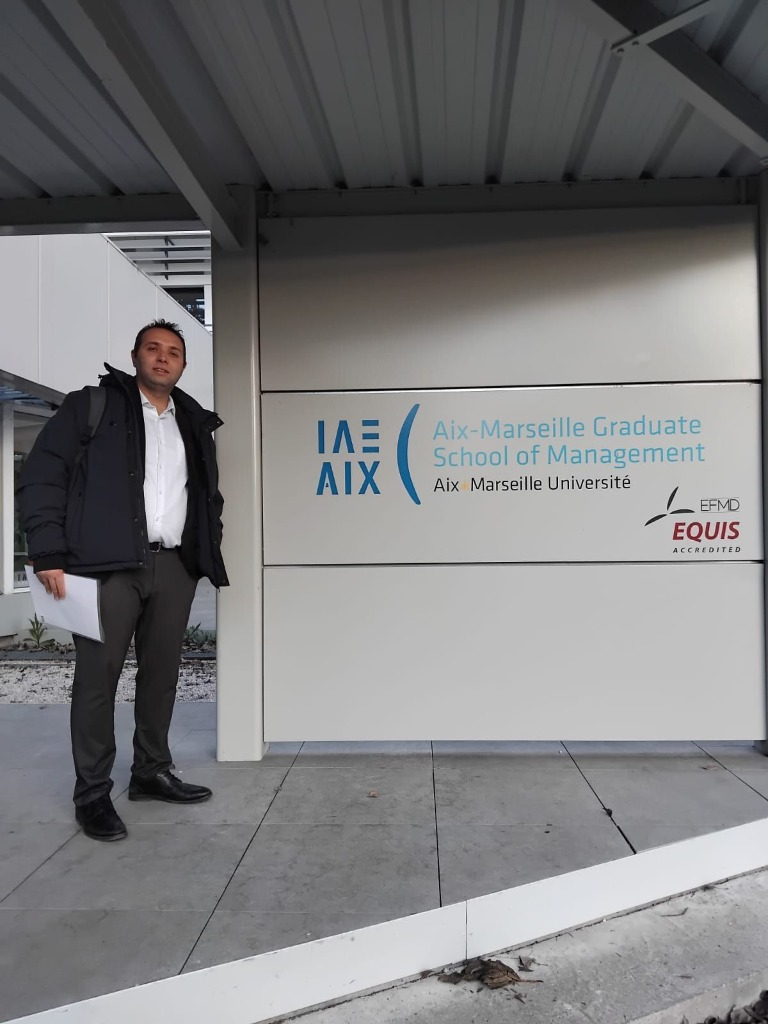
Dr. Mohamad Saab
PhD · AI Expert · University Instructor · Published Researcher
With a PhD in Scientific Computing & Programming and over 15 years of hands-on AI engineering experience in some of France's most demanding technical environments, Dr. Saab brings rare depth and credibility to AI education.
He is an expert in AI who has worked as an AI and Data Science engineer at major institutions including IFPEN (French Institute of Petroleum), IRSN (Institute for Radiological Protection and Nuclear Safety), CNRS (National Centre for Scientific Research), and ASSYSTEM, and later led Generative & Agentic AI projects at Capgemini.
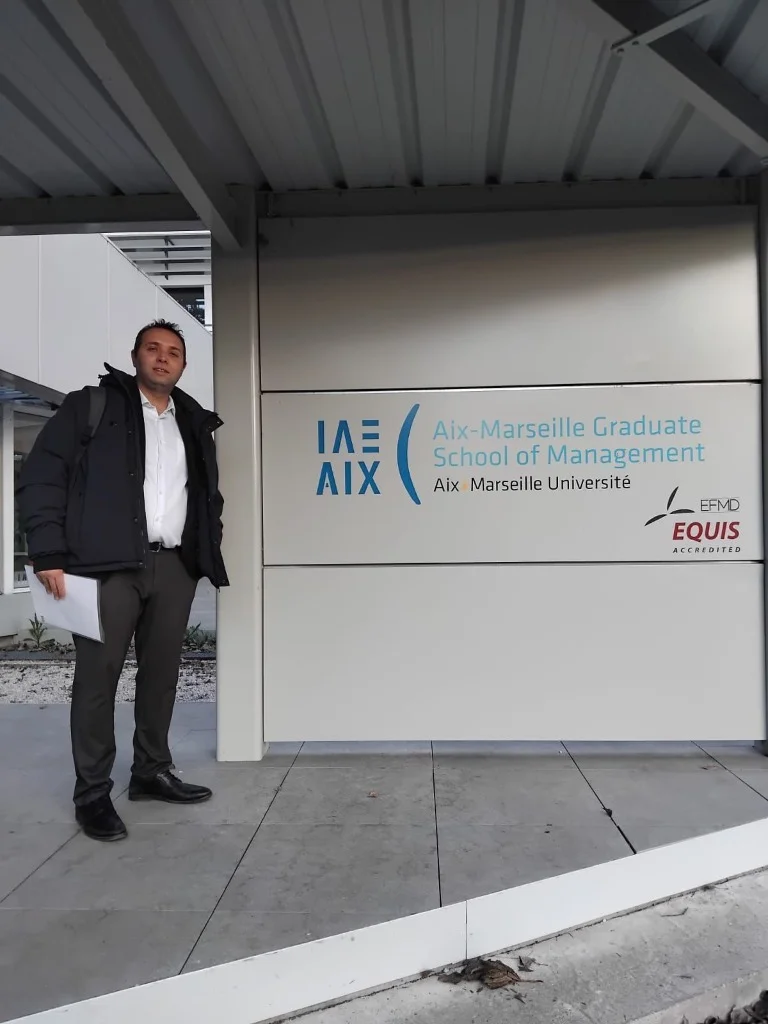
He is the author of more than 13 peer-reviewed scientific articles, and currently teaches AI at the University of Aix-Marseille (IAE Aix-Marseille Graduate School of Management) — one of France's top-ranked graduate business schools.
For Teachers & Students
AI for Teachers: Save Hours, Teach Better
A practical course for teachers who want to use AI to prepare lessons, generate quizzes and exercises, analyze student performance, and guide students responsibly — without needing a tech background.
View Course →AI for Education: Use AI to Think, Not Just Copy
Learn to use ChatGPT, Claude and Gemini as thinking tools — not shortcuts. Understand how AI works, when to trust it, and the risks you need to know.
View Course →Python Programming for Students
Start from zero and build real projects with Python — the world's most popular programming language. Games, automation, and your first AI scripts.
View Course →Live AI Tools for Education
Beyond courses and consulting, these AI-powered platforms are deployed in production and used by thousands of students worldwide.
Polygenius
EdTech AIAI coaching platform for personalised multi-subject learning. 65% higher retention vs. traditional methods.
Launch Polygenius →Speeko
Language AIConversational AI language learning. +40% oral fluency improvement in 30 days.
Launch Speeko →QuizGenius
Assessment AIAI quiz & assessment generation. 90% reduction in content creation time for teachers.
Launch QuizGenius →The best time to build your AI strategy was last year.
The second-best time is today.
Whether you need consulting for your school, training for your teachers, or courses for your students — let's start a real conversation about where you are and what you need.